Ever thought about what keeps you safe on the road? A DUI breathalyzer in your car might be your secret protector against drunk driving.
Car breathalyzer tech can be hard to understand. But these tools are key in stopping drunk driving in the U.S. They help with legal rules and keeping roads safe.
Drivers need to know about DUI breathalyzers. They help keep you and others safe. This guide will show you all about in-car breathalyzer systems.
Key Takeaways
- DUI breathalyzers serve as critical safety devices for preventing impaired driving
- Multiple types of car breathalyzers exist for different user needs
- Legal requirements vary by state for breathalyzer installations
- Technology continues to improve breathalyzer accuracy and reliability
- Personal responsibility is key in preventing drunk driving incidents
What Is a DUI Breathalyzer?
Drunk driving is a big problem on American roads. An Ignition Interlock Device helps stop alcohol-impaired driving. These systems are like a shield against dangerous driving.
A Drunk Driving Device is more than a tool. It’s a lifesaver that keeps drivers, passengers, and pedestrians safe from drunk driving risks.
Definition and Purpose
An Ignition Interlock Device is a special breathalyzer in your car. It does a few important things:
- It stops your car from starting if you’ve had alcohol.
- It’s a court order for DUI offenders.
- It helps drivers stay safe on the road.
- It keeps everyone safe by stopping drunk driving.
How It Works
Here’s how a Drunk Driving Device works:
- Driver blows into the mouthpiece.
- The device checks if there’s alcohol in the breath.
- If there is, the car won’t start.
- It checks again while you’re driving.
Modern devices use smart sensors to check your blood alcohol level. This makes sure you can’t drive if you’ve had too much to drink.
| Device Component | Function |
|---|---|
| Mouthpiece | Collect breath sample |
| Sensor Unit | Analyze alcohol content |
| Ignition Interface | Control vehicle start mechanism |
Safety technology keeps getting better to protect us from drunk driving.
The Importance of DUI Breathalyzers in Vehicles
DUI prevention devices are key for safer roads. They help drivers, passengers, and communities in the U.S. stay safe.
https://www.youtube.com/watch?v=jR-Q5KreZfg
Breathalyzers play a big role in keeping drivers safe and following the law. They change how we deal with alcohol and driving.
Legal Requirements Across States
All 50 states have rules about breathalyzers to fight drunk driving. Each place has its own rules and how they enforce them.
- Drivers under 21 face zero-tolerance policies.
- Commercial drivers have stricter BAC limits.
- Some drivers must use ignition interlock devices.
Preventing DUI Incidents
DUI prevention devices stop drunk driving. They work by:
- Checking for alcohol before driving.
- Stopping the car if BAC is too high.
- Making drivers take responsibility.
| Device Type | Prevention Effectiveness | User Compliance Rate |
|---|---|---|
| Ignition Interlock | 85% | 92% |
| Smartphone Breathalyzer | 65% | 78% |
Encouraging Responsible Driving
DUI safety devices help drivers make better choices. They give feedback in real time.
With advanced breathalyzer tech, we add more safety layers. This goes beyond just following the law.
Types of DUI Breathalyzers Available
Breathalyzer technology has changed a lot. Now, there are many options for people and the law. Knowing about the different DUI breathalyzers can help you pick the best one for you.
Personal Breathalyzers
Personal breathalyzers are small and easy to use. They help you check your blood alcohol level (BAC) quickly. They are:
- Portable and easy to carry
- Affordable personal safety tool
- Basic BAC screening before driving
- Helps prevent possible IID Installation scenarios
Professional Breathalyzers
Professional breathalyzers are for those who need to follow strict rules. They are used for DUI offenders. These devices have:
- Advanced fuel-cell sensor technology
- Tamper-proof design
- Comprehensive data logging
- Automatic reporting capabilities
Smartphone-Connected Breathalyzers
New breathalyzers connect to your phone. They offer cool features like:
- Bluetooth-enabled devices
- Real-time BAC tracking
- Digital record management
- Instant sharing capabilities
Choosing the right breathalyzer depends on what you need, the law, and your safety. Professional devices are the most reliable for strict legal rules.
How to Choose the Right Breathalyzer for Your Car
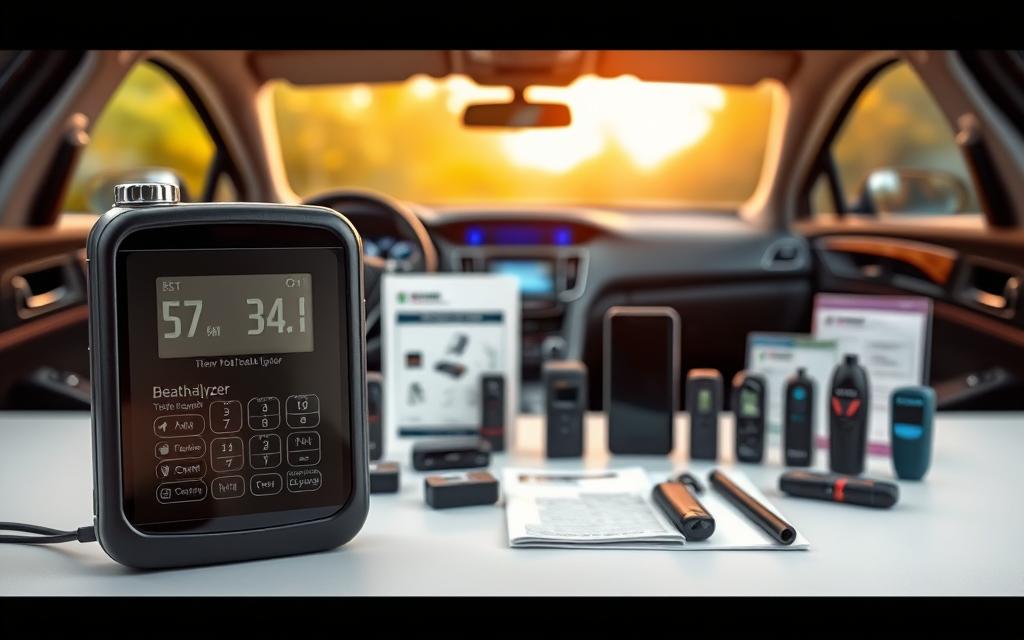
Choosing the right Car Breathalyzer is important. You need a device that is reliable and meets the law. It should also test accurately.
Essential Features to Consider
When picking a Car Breathalyzer, look at these key points:
- Display clarity and readability
- Data transmission capabilities
- User-friendly interface
- State certification compliance
- Battery backup systems
Accuracy and Calibration Requirements
Accuracy is very important for Ignition Interlock Devices. Top-notch breathalyzers use advanced sensors. This makes them more accurate than basic ones.
They need to be calibrated often. This is usually every 30 to 90 days.
Portability and Design Considerations
Today’s breathalyzers are designed to be discreet and useful. They are small and fit well in car dashboards. This makes them less noticeable.
Personal breathalyzers are even more portable. They can be stored in glove compartments or bags easily.
- Sleek, compact form factors
- Seamless vehicle integration
- Easy maintenance
Choosing the right Car Breathalyzer is about finding a balance. You need to think about technical needs, legal rules, and how easy it is to use.
Legal Aspects of DUI Breathalyzers
Understanding DUI breathalyzers’ legal side is key. You need to know the laws in your state. This helps avoid big penalties.
Getting a DUI attorney is very important. Laws about DUI breathalyzers differ in each state. This can greatly affect drivers.
State Laws Regarding Use
DUI breathalyzer rules change a lot from state to state. Here are some things to think about:
- Mandatory installation for first-time offenders
- Varying device usage periods
- Specific blood alcohol concentration (BAC) thresholds
A good DUI lawyer can explain these rules. States have different ways of enforcing breathalyzer laws:
| State Category | Breathalyzer Requirements | Typical Duration |
|---|---|---|
| Strict Enforcement | Mandatory for all DUI offenses | 6-24 months |
| Moderate Enforcement | Selective installation | 3-12 months |
| Limited Enforcement | Only for repeat offenders | 12-36 months |
Consequences of Non-Compliance
Not following breathalyzer rules can lead to big problems:
- Extended device installation periods
- Additional financial penalties
- Potential license suspension
- Possible criminal charges
Modern breathalyzers keep track of all use. Trying to cheat these systems can cause even worse trouble than following the rules.
How to Properly Use a DUI Breathalyzer
Knowing how to use a Car Breathalyzer is key for drivers with an Ignition Interlock Device. These tools help keep roads safe and drivers responsible. Using them right can make things easier and prevent problems.
Step-by-Step Instructions
Using a Car Breathalyzer needs focus and following certain steps:
- Turn your car on to start the device
- Wait for it to warm up
- Get ready to give a breath sample when asked
- Take a deep breath and blow steadily into the mouthpiece
- Keep blowing at the same pressure for 5-6 seconds
- Wait for the device to check your breath
Common Mistakes to Avoid
Drivers with an Ignition Interlock Device should watch out for mistakes that can cause problems:
- Don’t give breath samples right after eating or drinking
- Don’t use mouthwash or breath spray before testing
- Make sure your breath samples are strong and steady
- Listen for retest prompts while driving
- Never try to skip the device’s tests
Getting good at using a Car Breathalyzer takes practice and patience. Many service providers offer training and help to make users comfortable with their devices.
Maintenance and Care of Breathalyzers
It’s very important to keep your IID Installation in good shape. This helps you follow the rules for interlock devices. It also makes sure your readings are right and avoids legal trouble.
Breathalyzer devices need regular care to work right. If you ignore this, they might not work or you could break the rules.
Regular Calibration Essentials
Calibration is key for breathalyzer upkeep. Certified techs do this to make sure the device finds alcohol correctly. Here are some important steps for calibration:
- Schedule calibration every 30-90 days
- Visit authorized service centers
- Ensure device accuracy through professional testing
- Download and review data logs
Cleaning Procedures for Optimal Performance
Keeping your device clean is very important for it to work well. Here’s how to clean it:
- Clean mouthpiece with alcohol-free disinfectant wipes
- Inspect for damage or wear regularly
- Wipe external surfaces with a soft, damp cloth
- Avoid moisture near electronic components
Pro tip: Treat calibration appointments with the same importance as legal commitments to maintain full compliance with interlock requirements.
Professional service providers have big networks to help. Most calibration visits are quick, taking only 15-30 minutes. This doesn’t mess up your day.
The Role of Breathalyzers in DUI Offender Programs
DUI offender programs have changed how we help people after a DUI. They use special breathalyzers to check if drivers are safe to drive again.
The Interlock Requirement is key in showing drivers are serious about safe driving. A DUI Specialist helps them through this tough process.
Required Installations
Courts and DMV often say you need a breathalyzer to keep driving. Here’s what happens:
- You get a court order or DMV notice.
- You call an approved provider.
- You schedule a pro to install it.
- You learn how to use the device.
Monitoring Progress
Breathalyzers watch over drivers during their program. They record every test, showing:
| Monitoring Aspect | Details |
|---|---|
| Test Results | Date, time, and BAC readings |
| Compliance Tracking | Rolling retests and violation records |
| Program Completion | Violation-free period verification |
Working with a DUI specialist makes the Interlock Requirement easier. It helps drivers learn to drive safely and responsibly.
Understanding BAC and Its Relation to DUI
Blood Alcohol Concentration (BAC) is key in DUI cases. It shows how alcohol affects driving. Knowing this helps people drive safer and understand DUI laws.
Defining Blood Alcohol Concentration
BAC shows the alcohol in your blood. Important points are:
- Measured in percentages (e.g., 0.08%)
- Drivers over 21 can’t have more than 0.08%
- Commercial drivers and those under 21 have stricter limits
How BAC Impacts Driving Performance
Alcohol affects driving at different levels:
- 0.02% BAC: Judgment gets worse, you feel a bit relaxed
- 0.05% BAC: Coordination and alertness drop
- 0.08% BAC: Muscle control and decision-making get really bad
Breathalyzers are important in DUI cases. They measure alcohol levels. This helps police and lawyers see if someone is too drunk to drive.
Knowing about BAC is key for defending against DUI charges. Things like how fast you metabolize alcohol, your weight, and how much you drink matter. They can be important in court.
Innovations in DUI Breathalyzer Technology
DUI prevention devices are getting better fast. They are now smarter and more advanced. This is thanks to new technologies.
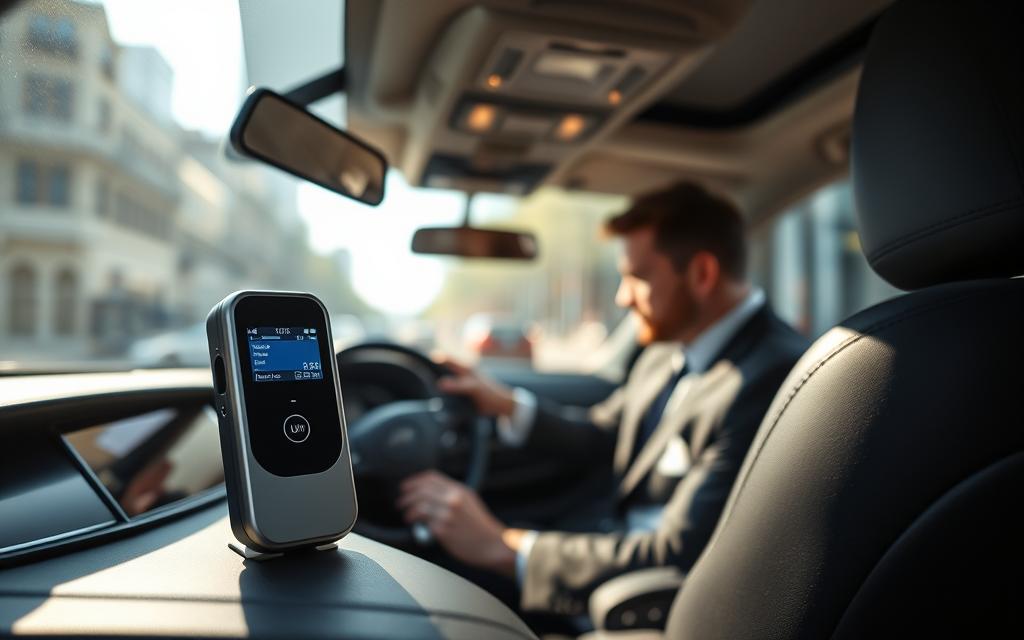
New breathalyzer tech is making big changes. It’s more accurate and easier to use. Now, DUI prevention devices have cool new features:
- Advanced sensor technologies with improved accuracy
- GPS tracking capabilities
- Real-time data transmission
- Smartphone connectivity
Emerging Features in New Models
New Ignition Interlock Devices are amazing. They have better tech:
| Feature | Technological Improvement |
|---|---|
| Sensor Technology | Fuel-cell sensors with increased sensitivity |
| User Interface | Color touchscreens with multilingual support |
| Identity Verification | Integrated camera systems |
The Future of Breathalyzer Tech
New tech is changing how we stop drunk driving. Researchers are working on:
- Passive alcohol detection systems
- Touch-based sensors in vehicle interfaces
- Eye-tracking impairment detection
- Artificial intelligence integration
The Driver Alcohol Detection System for Safety (DADSS) is a big step. It could make cars safer from drunk driving. This could change car safety a lot in the future.
Integrating Breathalyzers into Ride-share Services
The transportation world is changing for the better. New drunk driving device tech is making ride-shares safer. Now, ride-shares are using car breathalyzers to keep everyone safe and stop drunk driving.
Ride-share companies know how important safety is. They’re using car breathalyzers to set new safety standards. This makes rides safer for everyone.
Safety Benefits for Drivers and Passengers
There are many good things about breathalyzer tech:
- Drivers can check if they’re sober right away
- Passengers feel safer
- It can tell if someone is too drunk to drive
- It helps stop drunk driving before it starts
Potential Impacts on DUI Rates
With breathalyzers, ride-shares can really cut down on drunk driving. This tech is a strong way to stop drunk driving before it happens.
| Technology Impact | Potential Reduction |
|---|---|
| Driver Screening | 75% fewer impaired drivers |
| Passenger Awareness | 60% increased safety consciousness |
| DUI Prevention | 50% decrease in possible incidents |
The future of safe travel is all about using tech to keep everyone safe. It’s about making sure everyone behaves responsibly on the road.
The Effect of Breathalyzers on Insurance Policies
Dealing with insurance after a DUI is tough. A DUI conviction can cost a lot of money. It affects your insurance rates and what you can get covered.
Having a DUI changes your insurance a lot. Your rates will likely go up a lot. Talking to a DUI legal expert can help you understand this.
How Policies Are Affected by DUI Incidents
Insurance companies do a few things when you get a DUI:
- Premium increases of 80-100%
- Potential policy cancellation
- Requirement for SR-22 financial responsibility certificate
- Potential assignment to high-risk insurance categories
A DUI court lawyer can help with these insurance issues. The money problems can last for years. Some states keep records for up to 10 years.
Discounts for Using Breathalyzers
Some insurance companies offer special deals:
- Premium reductions for voluntary breathalyzer installations
- Discounts ranging from 5-15% for demonstrated responsible driving
- Usage-based insurance programs tracking driver behavior
If you want to know about discounts, call your insurance. They can tell you about breathalyzer discounts.
Misconceptions About Breathalyzers
Breathalyzers are key in DUI defense, but many myths exist. A DUI defense lawyer knows these tools have limits. These limits can change legal outcomes.
Many people don’t get how breathalyzers work. This leads to wrong ideas about drinking and driving.
Common Myths Debunked
- Myth: Breathalyzers can be fooled by mints or breath spray
Reality: Modern devices detect alcohol molecules precisely - Myth: Eating food quickly reduces blood alcohol concentration
Reality: Only time eliminates alcohol from your system - Myth: Hyperventilating changes test results
Reality: Professional breathalyzers include advanced detection mechanisms
Understanding Device Limitations
A skilled DWI lawyer knows breathalyzers are not perfect. Medical issues, temperature, and calibration can affect results. They measure alcohol in breath, which relates to blood alcohol levels.
Breathalyzers only find alcohol, not other substances. They help stop drunk driving. But knowing their limits is key for safe use.
Frequently Asked Questions About DUI Breathalyzers
Understanding DUI breathalyzers can be tricky. Many people want to know how they work, if they’re reliable, and their legal role. A DUI case attorney can offer specific advice. But this guide answers common questions about these devices.
How Accurate Are They?
The accuracy of breathalyzers depends on several things. Top-notch devices with fuel-cell sensors are very precise, within ±0.005% BAC. Important factors include:
- Device quality and technology
- Proper calibration schedules
- Correct usage technique
- Appropriate testing timing
A DUI advocate suggests regular upkeep for best results. State-certified devices meet strict standards set by the National Highway Traffic Safety Administration.
Do They Replace Field Sobriety Tests?
Breathalyzers and field sobriety tests are not the same. Field tests check how well someone moves, while breathalyzers measure alcohol levels. Studies show field tests are about 77% good at spotting drunk drivers.
- Field tests: Subjective physical assessments
- Breathalyzers: Objective chemical measurements
- Legal proceedings often use both types of evidence
Can They Be Trusted?
Professional breathalyzers are very reliable when used right. They’ve been tested for years. Important trust factors include:
- Regular maintenance and calibration
- Proper user technique
- Certification by appropriate authorities
- Understanding device limitations
A DUI case attorney can explain breathalyzer results and their legal use.
Best Practices for DUI Breathalyzer Use
Using DUI breathalyzers needs careful steps and smart actions. They are used in DUI programs or on your own. Knowing the best ways can make sure tests are right and you follow the rules.
Developing Consistent Testing Routines
Good breathalyzer use starts with steady habits. A DUI consultant suggests these important steps:
- Let the device warm up enough
- Wait 15-20 minutes after eating or drinking
- Make sure your breath is right
- Quickly answer to rolling retest warnings
Maintaining Your Device
Keeping your breathalyzer in good shape is key. Important steps include:
- Set up timely calibration appointments
- Change mouthpieces when needed
- Check the battery often
- Tell service providers about any problems
If you’re in a DUI program, keep records of your device’s care and tests. This shows you’re serious about following rules and being safe.
Remember, breathalyzers are for safety. Using them right helps avoid legal trouble and keeps roads safer.
Resources for More Information
Understanding DUI prevention and legal help can be tough. This section offers key resources for those looking for guidance and support.
Dealing with DUI issues can be tough. A DUI Defense Expert can give important legal advice. Many groups also offer support and info.
National Organizations and Hotlines
There are important support groups for DUI issues:
- Mothers Against Drunk Driving (MADD): Helps victims and teaches about DUI
- National Highway Traffic Safety Administration (NHTSA): Gives info on preventing drunk driving
- Substance Abuse and Mental Health Services Administration (SAMHSA) Helpline: 1-800-662-4357
If you need help after a DUI arrest, call a DUI Law Firm. Call Now! 833-818-4790 to talk to a specialist.
Online Educational Resources
Learn more with these online resources:
- State DMV websites for DUI laws
- Ignition interlock provider websites
- Legal info from state bar associations
- National Institute on Alcohol Abuse and Alcoholism (NIAAA) materials
Always check info from different places. And talk to experts about DUI legal issues.
Conclusion: The Importance of Being Informed
Understanding DUI safety devices is key. A drunk driving attorney can help a lot. But, you must also take personal responsibility to avoid drunk driving.
Breathalyzer technology has changed how we think about drinking and driving. It helps us make safer choices.
Using a DUI safety device is more than just following the law. It’s a promise to keep everyone safe on the road. Today’s breathalyzers are smarter and easier to use.
They help us make good choices before we get behind the wheel. This way, we can stay safe and follow the law.
New technology is making DUI prevention tools better. Soon, we’ll have even more advanced and easy-to-use devices. These will help us make smart choices about drinking and driving.
The main goal is to make our roads safer. We can do this by working with lawyers or using DUI safety devices ourselves. Together, we can keep our communities safe.
Knowledge, technology, and being responsible are the keys to stopping drunk driving. Let’s all do our part to make our roads safer.